This post is about capitals CLUNYBRIEN . I am writing this Post using dictation which will explain the awkward nature of son of bit.
In the Irish language the word Cluni or Clon translates into the word meadow. This can be misleading, one will run across literally hundreds of places in Ireland that start with those words.
In ALL cases, that is 99% of the time the word used in combination with a name usually a family name and signifies the location of an Abby.
There is in the geographical area of interest to us ,that is the BOYLE Smutternagh Area ,a town land with the name clunybrien,in English. The Irish of this is CLUAIN O’BRAOIN which correctly translates in English
to the Abby of the Bruins. The Problem or the core of the issue for me is that there has never been reference in the literature to the Abby at that site.
This situation has bothered and I am forced to speculate what explains the situation. In looking into this situation several other issues arose most notably the size of Clunie Brian. The current townland of Clunie Brian is fairly modest . At this point I think I should drop right to the conclusion my studying speculation. That is I believe that originally the area currently occupied by Rockingham Demense and additional Town lands between Rockingham and the current town land of Clunie Brian was at one time all CLUYBRIEN, and was aspirational
the site of an ecclesiastical foundation.
I or we and very fortunate and lucky that is in the material that has been available to the in the study of the origin of the Bruen name. and I Will speak more of that later, there have been some bad luck also.” of importance here is the formation of the Rockingham demense . Rockingham was formed in the 1600s at became a pervasive presents in the area. It was also surrounded and when it was formed buy a high stone fence that is I believe over 19 miles in length. The important point for us is that access to that geography was strongly and greatly limited. There were of course workman peeple farming subsections. But by and large the public at all levels un welcome . The most telling example I can give you of this situation and its impact is that when John O'Donovan did his studies all counties and in all areas either personally or with his hand picked lieutenants traveled to all areas including Boyle to record antiquities totally missed the existence KillBryan because it was Buried Behind the walls to which they did not have access. That was just one of the many mistakes made by the genius John O'Donovan. At the same time the fact that the land was controlled by a single Family allowed for the preservation of the kill Brian site. It is interesting to look at an overhead map of the Rockingham site and see that when they placed a major road from the walls to the Rockingham house they made a circle around the property that contain kill brian. Though there has always been a culture to not destroy sites of antiquity.
One of the things that happened what is that when mapmakers and other simple authorities we're drying out maps and making subdivisions Rockingham estate was block out as a single entity. And despite the fact that town lands aren't absolute core of the division of Ireland the town lands that wants covered the area of Rockingham were obliterated. So much so that people have simply forgot that prior to 1600 the geographical and political breakdown what's different. Having said that there were reports of Rockyinghan that did retain there're original Thailand designations. This exception and then he like it invariably apply to property which was ecclesiastical or Church property. This exception applies in many cases of interest to us and the results some interesting peculiarities. The basic geographic political subdivisions in Ireland are the county the barony parish and the town land. Ireland consist of I believe about 48,000 Town lands which covers every square inch of property. Later when symbol Authority became to be used there was A separation of sorts with the word Parish. Most time the civil Parish and church parish were identical or Very similar.
A
To get back to the central point of this post , to remind you, is this my speculation that Cluny Brian was once very much larger area than the current town land and stems from a very early hoped-for ecclesiastical site.
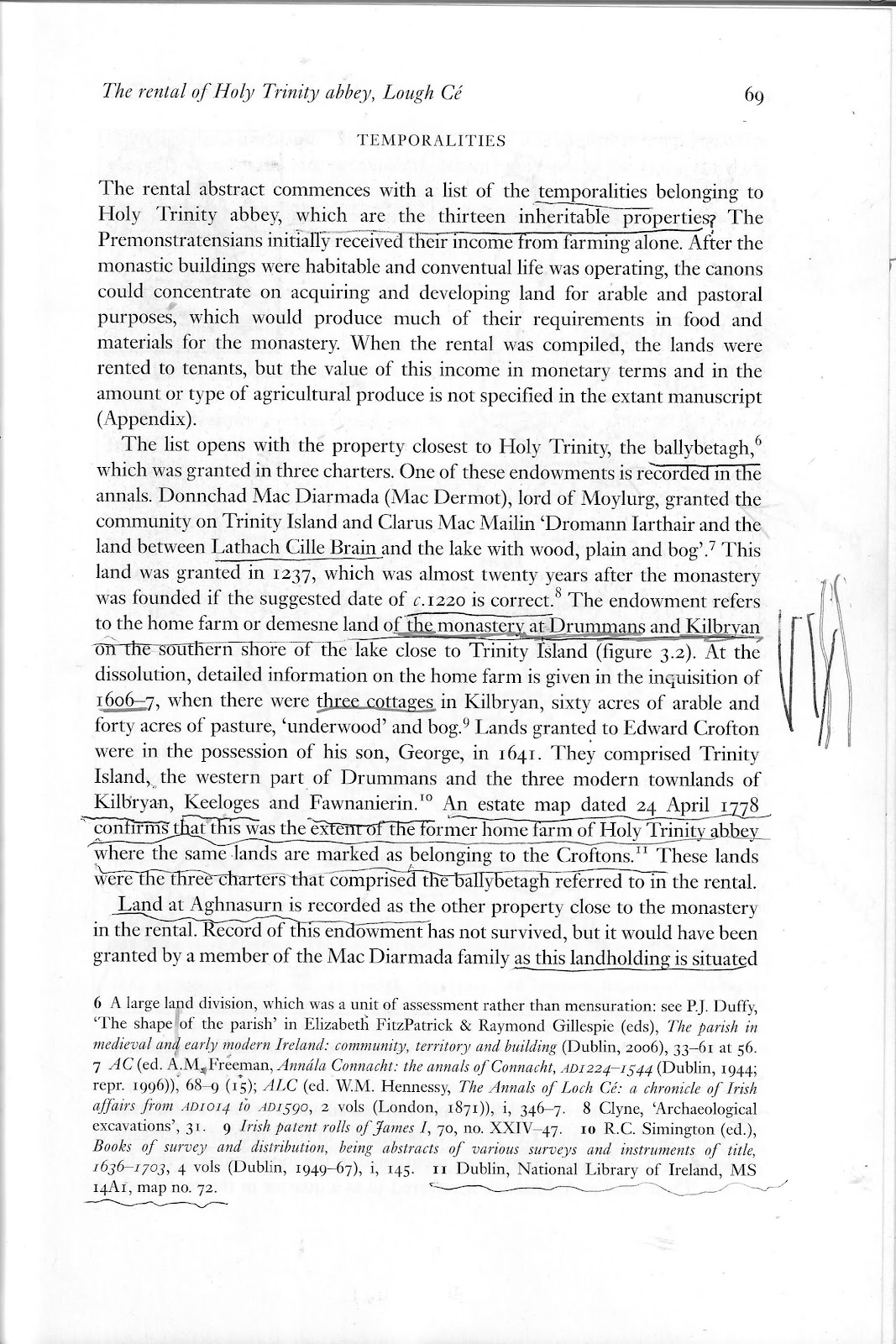
Well never mentioned as a as an ecclesia wstical site clinic Brian what Was mentioned frequently in the 15 and 1600 in the documents that recorded the give-and-take of the ownership of the land in Ireland. That process went back and forth several times and produced a number of documents that sighted people and places work dispossessed reassign. In those documents clothing Brian without much description physically was a Significant site in that it was the home and owed by the “Taniste" that is the king in waiting of the Area involved which in this case is the McDermotts. Clearly by that time bay Castle was located at the site. A building of some Single stature was also mentioned in I'm going years and what is the site of inaudible family Duignahn who we're poets a and historians. Parts of the annals of Lock Key were written there in the mid-to-late 1600s. Town land currently next to Clunie Brian is Oakport this is a moderate name and was clearly Cluny Brian prior to bing subdivided and renamed Oakport. There has been for several hundred years a major mansion or castle or they house at that site. I believe the sight it's probably the same site add is the castle of Clunie Brian previously occupied by the Taneste. Oakport is located on Drumw lake which is an extension i'll Lock key and the river flowing from ^ the house at Oakport or Oakport House is visible from Coote Hall.
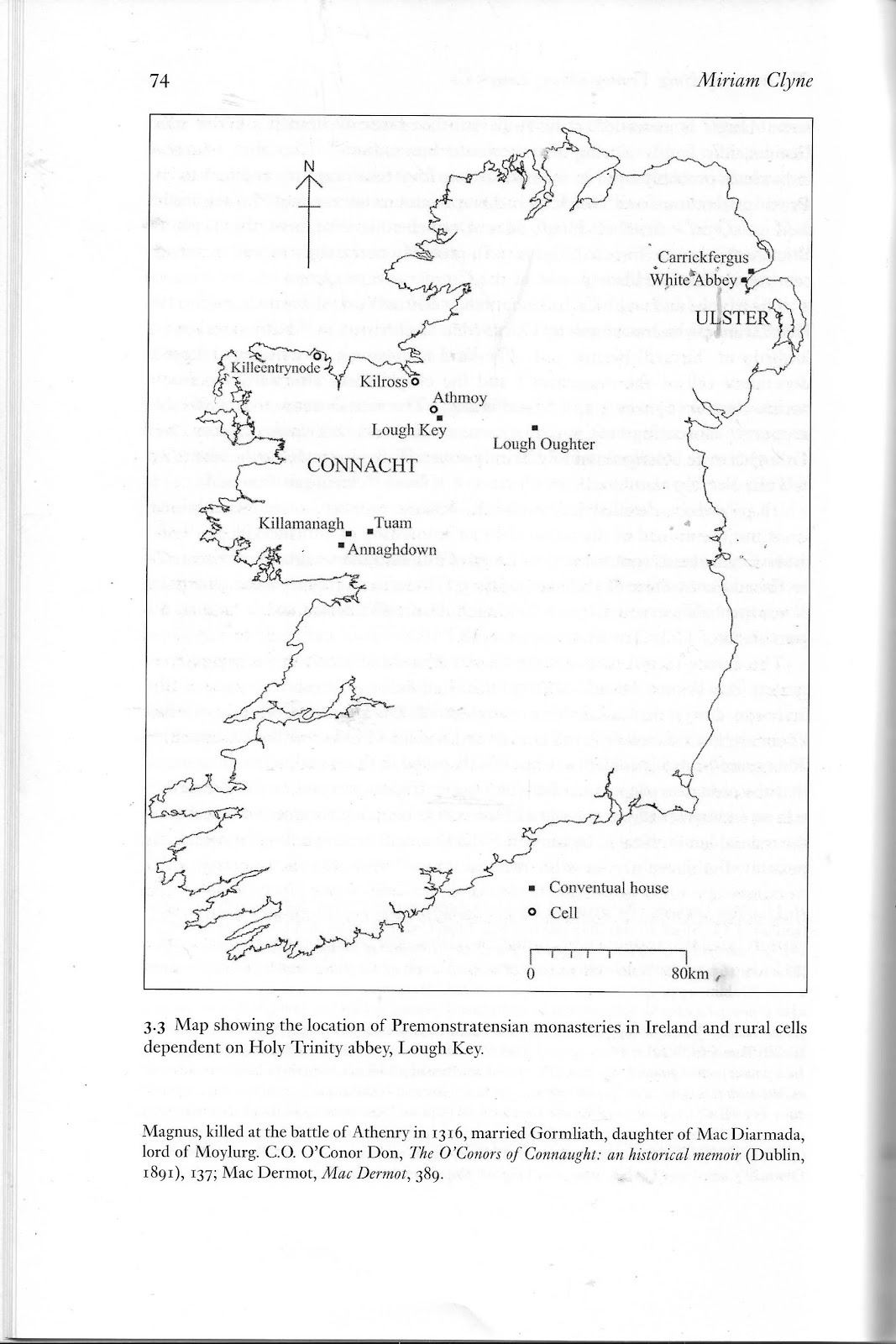
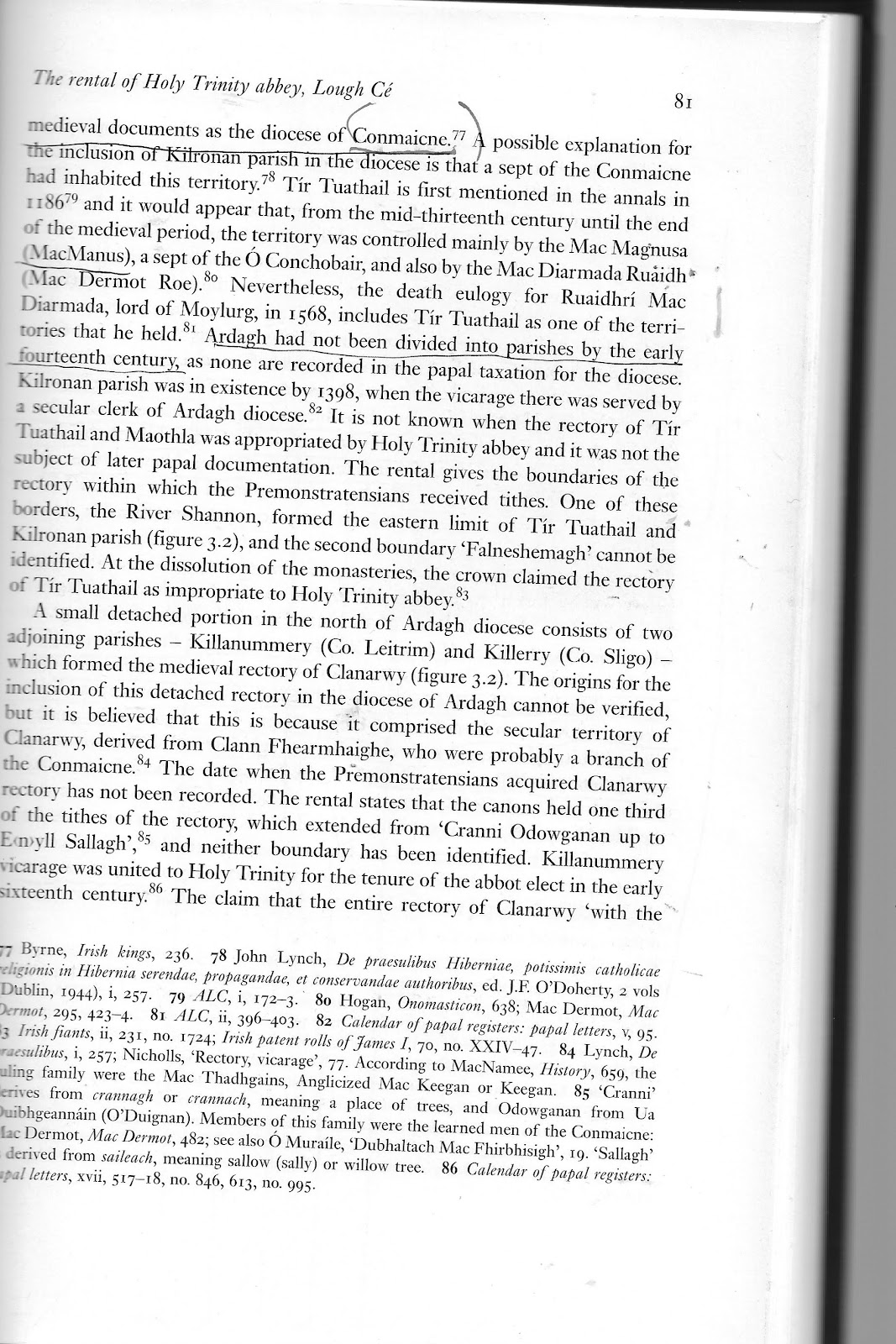
A refinement of this speculation on Clunybryan that the buildings that are currently killBrian and surrounding traces(see the study"THE major archeological study of killbryan”elsewhere in this blog.)was Clunybryan as much of it has was built. My estimate not contradictive my any available opinions or knowledge is that it was built in the early 500. The lock key area was extremely popular with ecliastical l organizations . There was also considerable competition between groups align to different Saints or leaders. The patricians fowlers of Saint Patrick were a major Group but there was competition from the followers of Colombo and one of the earliest establishments in the area Inismacnerin on the Boyle River also a major Abby Bill on Church Island in the early 500s well before Boyle Abby and the Abbey on Trinity Island. My speculation is further not BROIN’s followers
Who were patricians may have move in from Sligo and”Cilleaspuigbroin”to compete with the others ,of course they may have been there first since. Cilia easpuigbroin was bit in the late 400;s.
They other Abbey on Church and Trinity Island as well as Abby Boyle all wrong by European orders and hi considerable power not available to the founders i'll killBruin and Cluny Brian. Hence the originally anticipated maj. Abby was not follow through on and the smaller Church of Killbryan was what remained. There is some small evidence that picture Church of kill Bryan what is more significant then later became. That statement is based on the fact that wearing one of the English armies came through Roscommon they raided all of the major ecclesiastical sites at Abby's and included kill Brian in the list. There are no other references to kill Brian as a significant Church it later refer to in some documents as a parish church. Nonetheless it was significant enough so is that an entire town land and parish were named after it.
It's surfaced in the annals in 1237 when “all the land from" Latrach Cille Bryan”and the lake and drum mans island was given by the king to Clarus Macmillian and the monks of Trinity Abby.Later land at Rosbyrne(in he general area of killeaspuigbroin was given by a daughter which had been part of her marriage dowery.